Diwali gifting is here: the Radiance gift box, wrapped by hand
India · ₹ INR
Our story

From the texts to your skin

मयूख

Mayukh is Sanskrit for a ray of light. We chose it for what a good ritual feels like: a few quiet minutes, morning or night, when the day's light falls on skin you have looked after. Our ten formulas are inspired by the classical texts of Ayurveda, and this is how each one comes to be.

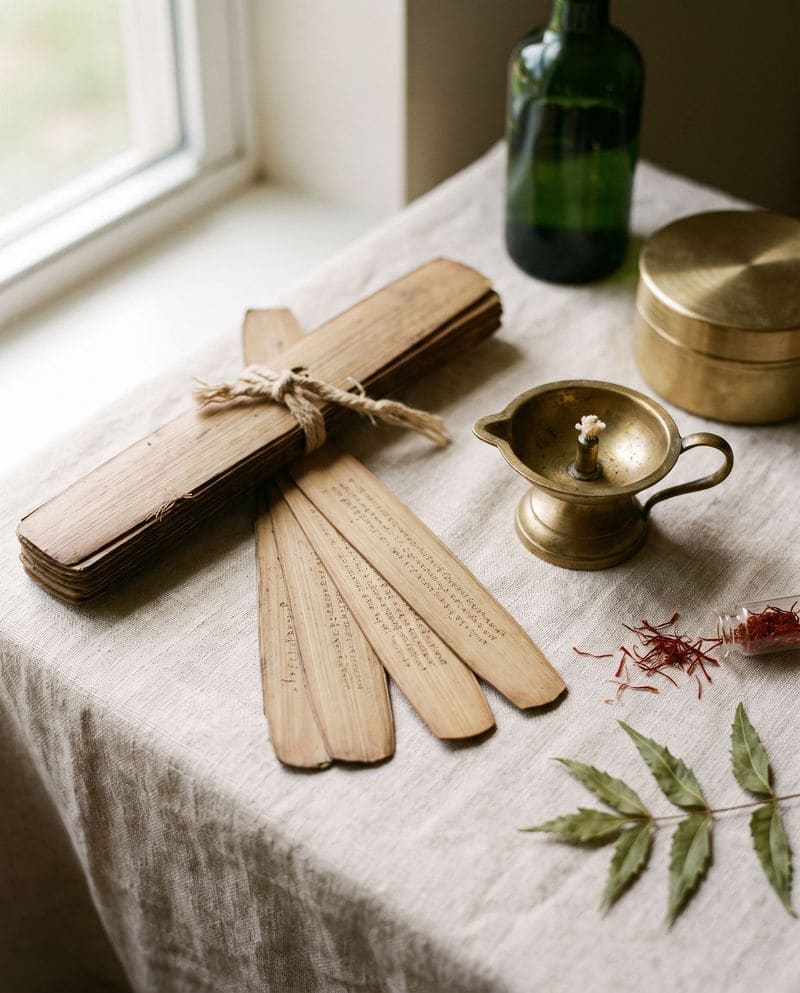
A palm-leaf manuscript beside saffron and neem
IThe texts

Every formula is inspired by a classical text

Kumkumadi is described in the Ashtanga Hridayam. Nalpamaradi comes from the Sahasrayogam. We name the texts that inspire our formulas so you can look them up yourself.

Ayurveda keeps its formulas in writing. The Ashtanga Hridayam, compiled by Vagbhata, sets out how Kumkumadi is made and used. The Sahasrayogam, the thousand formulas long kept by the vaidyas of Kerala, holds Nalpamaradi. Shatadhauta ghrita, ghee washed a hundred times, is named in the classical texts too.

Three of our formulas are inspired by those classical preparations: kumkumadi, nalpamaradi and shatadhauta ghrita. They are our own skin care formulas, not the classical preparations themselves. The others carry classical ingredients in forms the texts never knew, such as a gel cleanser, a summer lotion or a bar for the shower. Every ingredient is listed on the formula's page.
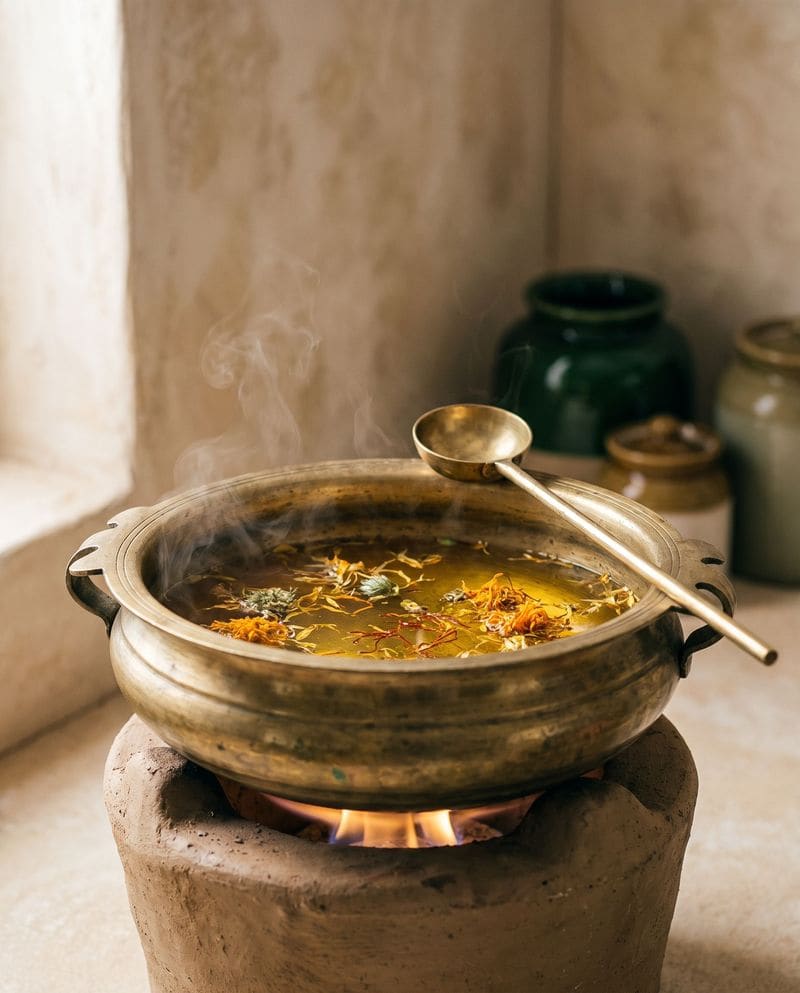
Sesame oil infusing slowly with saffron in a brass uruli
IIThe slow way

Sesame oil, warmed low for hours

Saffron and sixteen botanicals are infused into sesame oil over a gentle flame, the way the texts describe it. It takes time, so we give it time.

The classical way to make an oil is taila paka: herbs, water and a paste of the herbs are cooked into sesame oil over a gentle flame until the water has gone and only the oil is left, holding what the herbs gave it. Too much heat scorches the herbs, so the flame stays low and the oil is stirred and watched.

Our saffron night elixir is made this way, and so is the even-tone body oil. It is slower than mixing extracts into a base. It is also how the texts describe it, and the oil that comes out is deeper in colour and scent for it.

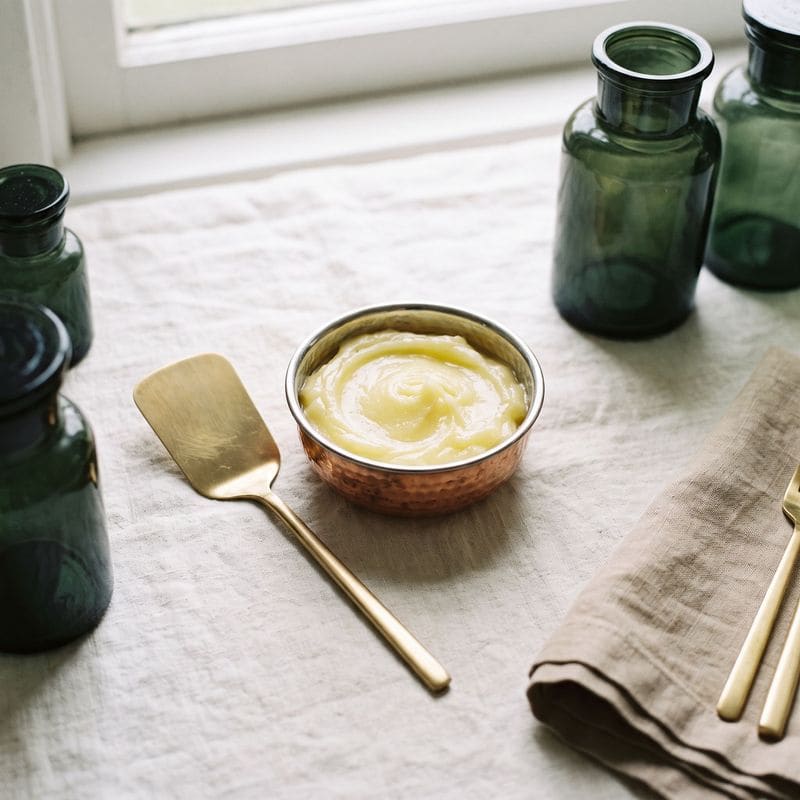
Whipped ghee in a copper bowl
IIIA hundred washes

Ghee, washed in copper a hundred times

For our ghee cream, ghee is washed with cool water in a copper bowl, again and again, until it turns into a light, cool cream.

Shatadhauta means washed a hundred times. Pure cow ghee is worked by hand against a copper bowl with cool water until the water clouds, then the water is poured off and the washing begins again. A hundred washes later the firm, yellow ghee has become a pale, whipped cream.

Nothing is added to make it change. Water is worked in, wash after wash, and the ghee turns light enough to spread like a lotion and melts into skin that feels tight or flaky.

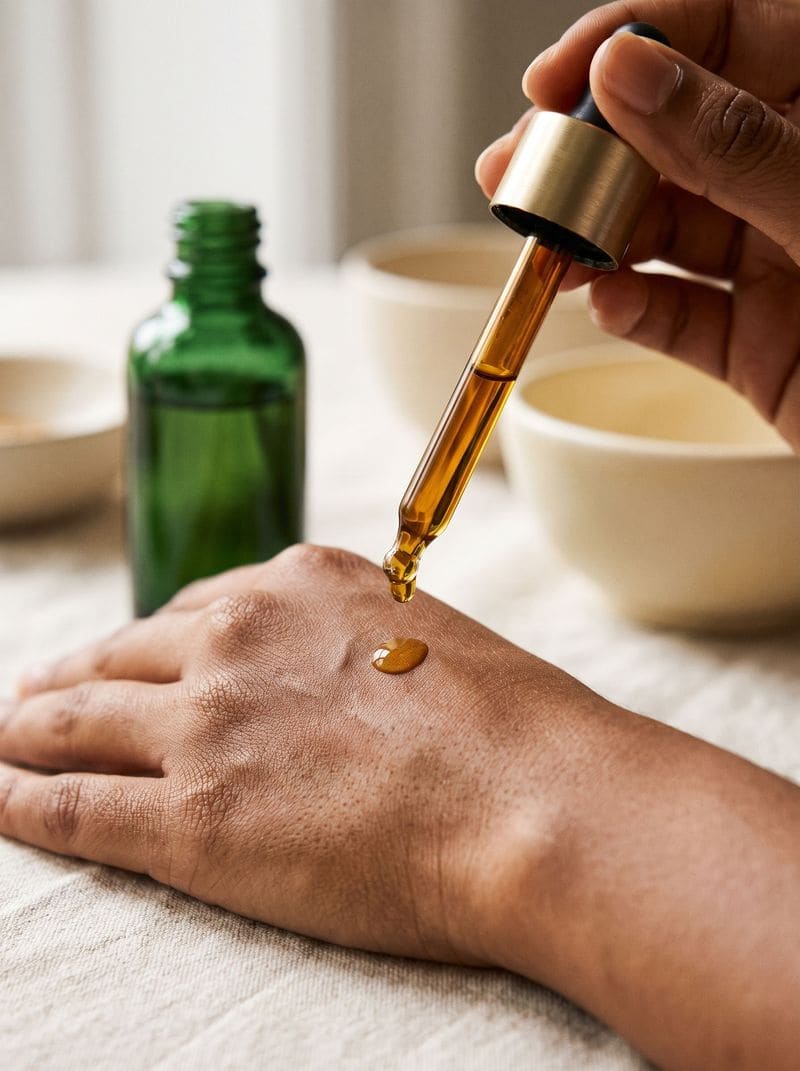
A drop of saffron oil on the back of a hand
IVYour ritual

Three drops, pressed in at night

A ritual is two or three steps, morning or night. Nothing more is asked of you.

Every formula belongs to one of four rituals, chosen by how your skin looks and feels: Clarify, Radiance, Nourish and Body. Each ritual is two or three steps, in the order you use them.

We would rather you used three formulas well, every day, than ten now and then. If you are not sure where to begin, answer three questions to find your ritual, or send us a photo on WhatsApp for a free skin report.